Shopping Cart
Shopping Cart
April 4, 2026
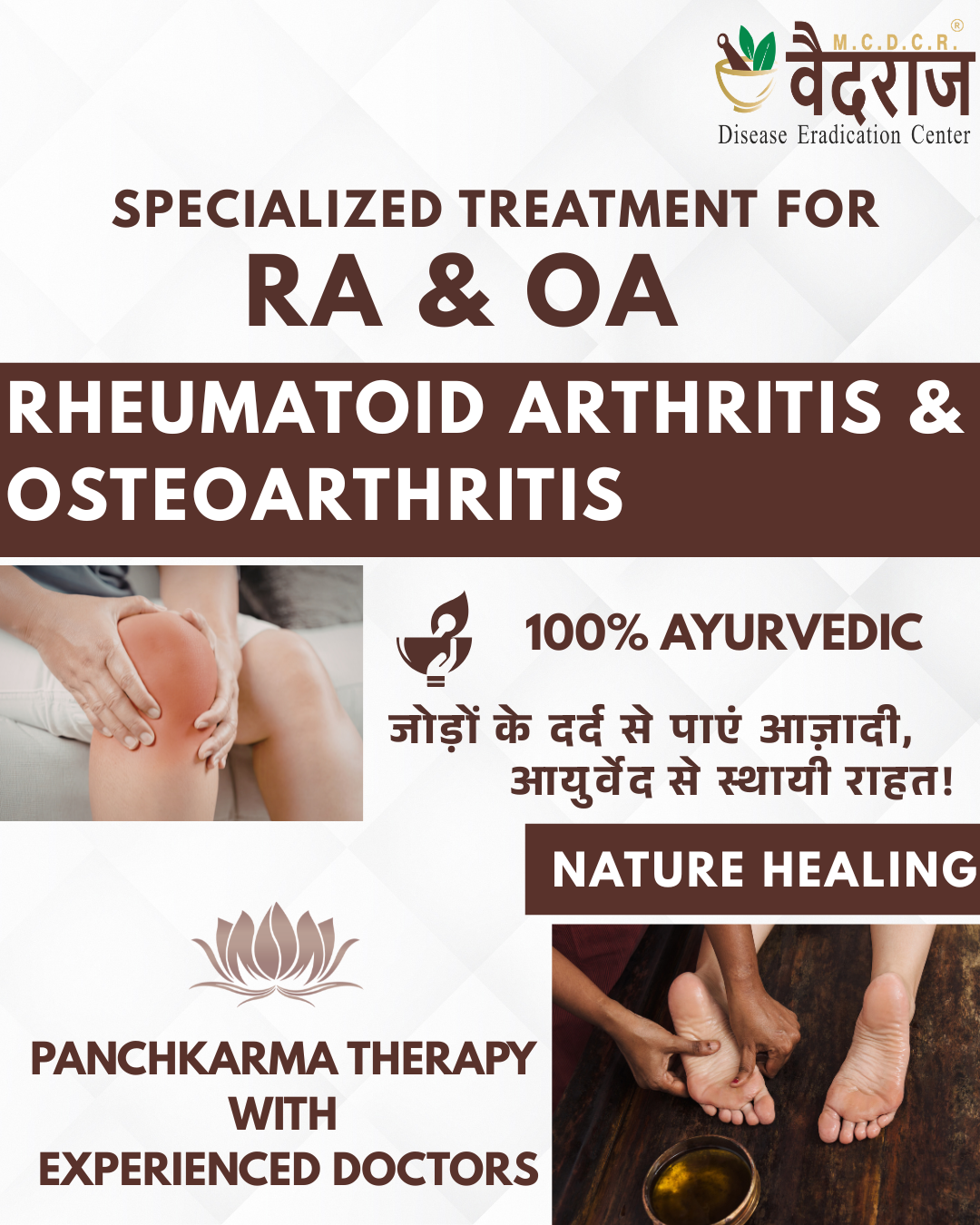
Joint pain is not a one-size-fits-all problem. This comprehensive guide breaks down the critical differences between Rheumatoid Arthritis (Amavata) and Osteoarthritis (Sandhigata Vata). Discover how Ayurveda utilizes targeted diets, herbal remedies, and specialized Panchakarma therapies to address the root cause of your specific joint condition, restoring mobility and quality of life.
If you suffer from chronic joint pain, everyday tasks like opening a jar, walking down the stairs, or simply getting out of bed can feel like monumental hurdles. Modern medicine categorizes joint pain into two primary camps: Rheumatoid Arthritis (RA) and Osteoarthritis (OA). While they both cause pain, they are fundamentally different diseases.
One is a fire of inflammation driven by the immune system; the other is a slow drying out and wearing away of the joint cartilage over time.
In Ayurveda, distinguishing between these two is the most critical step. Treating OA with the therapies meant for RA will yield no results, and treating RA with the rich oils meant for OA can actually intensify the pain. In this ultimate guide, we will explore exactly how Ayurveda views these two distinct conditions and how Panchakarma therapy can provide profound, customized healing for both.
To heal the body, we must first understand the root of the pain. Let’s look at how both modern science and the 5,000-year-old wisdom of Ayurveda categorize RA and OA.
The Modern View: RA is an autoimmune disorder. The immune system mistakenly attacks the synovium (the lining of the membranes that surround your joints). This creates massive inflammation, swelling, and systemic fatigue. The Symptoms: Morning stiffness lasting over an hour, warm, swollen joints, often affecting both sides of the body symmetrically (e.g., both wrists or both knees).
The Ayurvedic View (Amavata): In Ayurveda, RA is called Amavata. It occurs when poor digestion creates toxic, sticky, undigested waste called Ama. At the same time, Vata dosha (the energy of movement) becomes aggravated. The erratic Vata picks up the toxic Ama from the gut and deposits it into the joint spaces.
The Problem: Ama blocks the joint channels, causing severe inflammation, swelling, and intense pain. It is a disease of toxicity and inflammation
The Problem: Without lubrication, the joint space degenerates, and the bones grind together. It is a disease of dryness, depletion, and degeneration.
For OA (Sandhigata Vata): Because the joint is dry and degenerating, we must LUBRICATE and nourish it. Dry heat will only increase the wear and tear.
Panchakarma for RA focuses on deep detoxification, scraping away Ama, and correcting the immune system.
Before physical therapies, the digestive fire (Agni) must be restored to burn off existing toxins. This involves a strict, light diet (like mung bean soup) and herbal digestive stimulants.
This is the cornerstone treatment for RA. Clean, heated sand is tied into a poultice and stamped firmly over the swollen joints. The dry heat penetrates deep into the tissues, melting the Ama, instantly reducing swelling, and relieving severe morning stiffness. No oil is used.
A medically induced purgation therapy. Specific herbal laxatives are administered to flush out toxins and excess inflammatory heat (Pitta) through the lower digestive tract, providing systemic relief.
A unique enema formulated with tamarind, rock salt, and specific herbs. It is designed to aggressively scrape away toxic Ama from the gut and pacify erratic Vata dosha.
Panchakarma for OA focuses on intense localized nourishment, building tissue, and deep lubrication to replace lost cartilage cushioning.
Unlike RA, OA requires heavy, warm, medicated oils (like Mahanarayana Taila). Deep tissue massage with these oils pacifies the dry Vata dosha, increases circulation, and begins the process of re-lubricating the joints.
Since OA frequently affects the knees, Janu Basti is a miracle therapy. A well of black gram dough is built around the knee joint, and warm, medicated herbal oil is poured inside and retained for 30-40 minutes. The oil seeps deeply into the joint capsule, nourishing dried cartilage, reducing pain, and improving mobility. (Note: This can also be done on the lower back as Kati Basti or the neck as Greeva Basti).
Fresh, Vata-pacifying medicinal leaves (like Nirgundi and castor leaves) are fried in herbal oils, tied into a bolus, and massaged over the degenerated joints. This provides both heat (to relieve stiffness) and oil (to lubricate).
Small, daily enemas of warm medicated ghee or sesame oil are administered. The colon is the primary seat of Vata dosha. Nourishing the colon with oil deeply pacifies Vata throughout the entire body, preventing further joint degeneration.
Your diet must align with your specific condition to maintain the results of Panchakarma.
Avoid: Excessively dry or raw foods (like large raw salads), crackers, caffeine, and cold foods (these increase dryness and Vata).
Joint pain is complex, but it is not hopeless. Whether your immune system is causing inflammation (Rheumatoid Arthritis) or your joints are slowly wearing down (Osteoarthritis), Ayurveda offers a highly targeted, logical, and natural solution. By correctly diagnosing the root cause and applying the appropriate Panchakarma therapies—either detoxifying dry heat for RA or deeply nourishing oils for OA—you can halt the progression of the disease, rebuild your tissues, and reclaim a life free from pain.
Expert Joint Pain Treatment in mumbai Don't let joint pain limit your life. Whether you are dealing with the swelling of Rheumatoid Arthritis or the wear-and-tear of Osteoarthritis, our Ayurvedic doctors at [Insert Clinic Name] specialize in precise, individualized Panchakarma therapies.
📍 Visit Us: 004, ASHAWARI CHS LTD, B-2, Sector 10, Shanti Nagar, Mira Road East, Mumbai, Mira Bhayandar
📞 Book a Consultation: 8608679379
🌐 Schedule Online: https://vaidraj.co.in/user/consultation
We specialize in curing ailments like Rheumatoid Arthritis,Migraine - Chronic Headaches, Allergies, Asthma, Osteoarthritis, Spine Diseases, Digestive System Diseases, Skin Diseases, Hair-Beauty and Diabetes Control
Vaidraj Ayurveda Clinic, Lifeview Diagnostic Centre, Shiv Krupa Bldg 1st Floor, Opposite BMC Garden, S V P RD, Kandivali West, Mumbai 400067.
004,B2 ASAWARI SOC,SHANTI NGR,MIRAROAD, THANE, MAHARASHTRA, INDIA, 401107.